
CBCT Before Dental Implants: What 3D Imaging Can Show
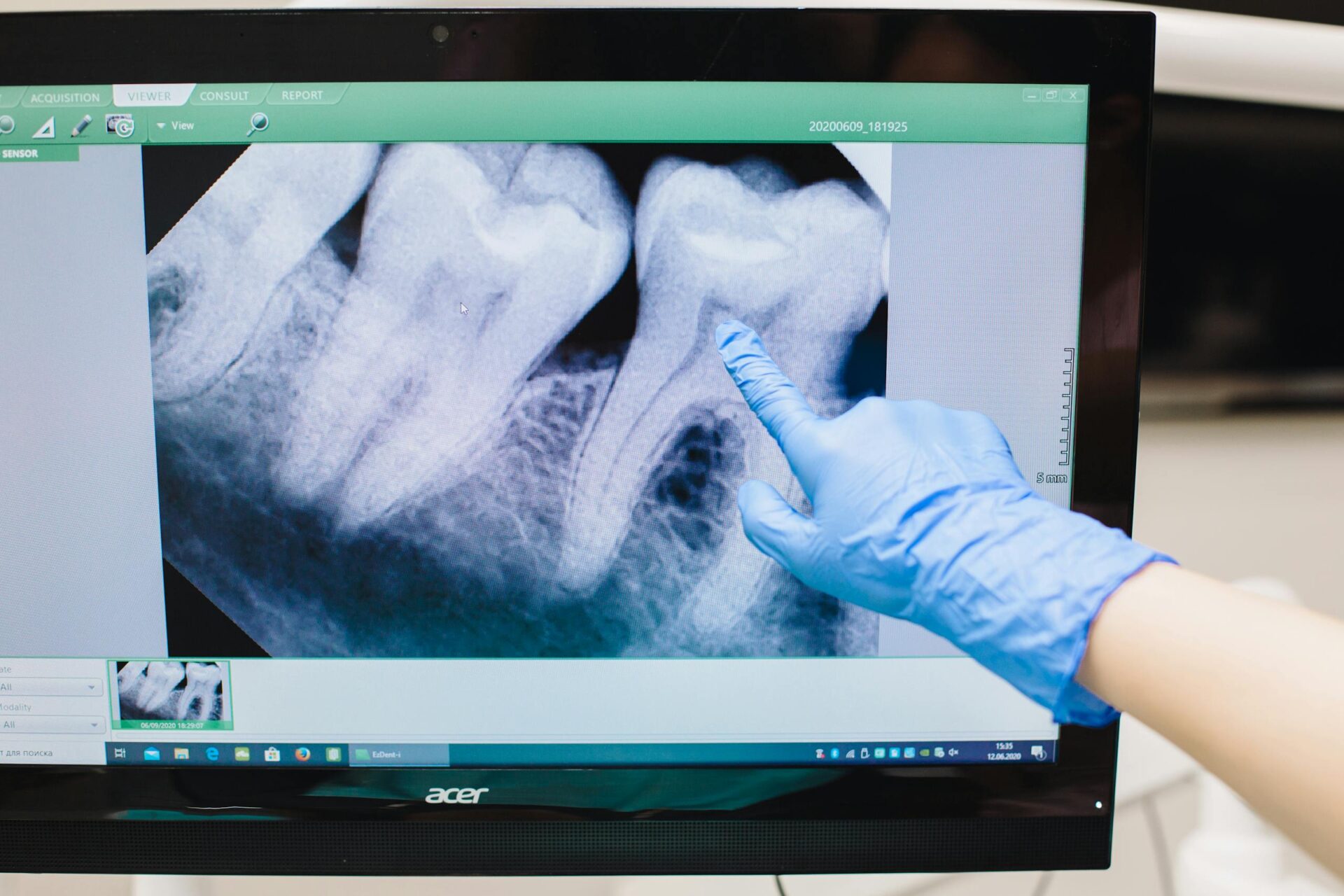
Before a dental implant is placed, your dentist may recommend a CBCT scan, a 3D dental scan. The goal is not to take more images for the sake of it. The goal is to see anatomy that can change the treatment plan.
Why a CBCT may be recommended before an implant
A regular dental X-ray is still useful, but it shows a flat, two-dimensional view. CBCT adds depth. That can matter when the dentist needs to judge whether an implant can fit, how it should be angled, and whether the surrounding bone has enough room.
Ontario guidance expects CBCT to be used when the extra information is likely to improve diagnosis or planning, not simply because the technology is available.
What 3D imaging can show that 2D X-rays may miss
- Bone height and how much vertical room is available for an implant
- Bone width and whether the ridge is narrow, uneven, or underdeveloped
- Ridge shape, including contours or undercuts that can affect placement
- Implant angulation planning so the implant can follow the best path into the bone
- Maxillary sinus position in the upper jaw
- Proximity to the inferior alveolar nerve and other key anatomy in the lower jaw
That extra detail can be especially helpful when the implant site is close to the sinus in the upper jaw or close to the nerve canal in the lower jaw.
How CBCT helps with implant position and planning
CBCT can support a more careful discussion about where the implant may fit and whether the site needs more preparation. If the scan shows limited bone or anatomy that gets in the way, the dentist may talk about grafting, sinus-related planning, site development, a different implant size, or another tooth replacement choice.
For patients comparing options, this is where planning matters most. If you are looking into dental implants, the scan can help turn a general idea into a more specific plan.
What CBCT cannot tell you on its own
A CBCT scan does not prove that an implant will succeed. It also does not replace the clinical exam, your medical and dental history, gum assessment, or conventional X-rays.
It also does not automatically mean an implant is needed. Some patients may still be better served by another option, or by delaying treatment until the site is ready. The scan is one part of informed decision-making, not the decision by itself.
When the scan is worth doing
CBCT is most useful when the extra 3D information is likely to change the plan or reduce uncertainty. In a straightforward case, a standard exam and 2D imaging may already give enough information to move forward with discussion. In a more complex case, 3D imaging can help avoid guesswork.
Lower-dose CBCT protocols may be used in some settings, but the image still has to be clear enough to answer the planning question. A scan that is too limited to be diagnostic is not helpful just because it uses less radiation.
Questions to ask before your implant visit
- What question is the CBCT meant to answer in my case?
- Will the scan change the treatment plan, or is it optional?
- What part of the implant site are you checking most closely?
- Could the scan show that grafting or another option should be discussed?
- Will my regular X-rays and exam still be part of the decision?
A calm next step for Hamilton patients
If you are in Hamilton and considering implants, a planning visit can help you and your dentist decide whether CBCT would add useful information for your case. Learn more about our dental implant treatment options if you want to understand the process before booking.
Key sources
- Ontario Dental CT Scanner Requirements
- ADA guidance on dental X-rays and CBCT
- CBCT in maxillary implant planning
This article is for general education only and does not replace personalized advice, diagnosis, or treatment from a licensed dentist.