
TOOTH REPLACEMENT
We compare partial, complete and implant-supported denture options while considering your remaining teeth, gums, bite, speech and daily routine.
HomeDentures
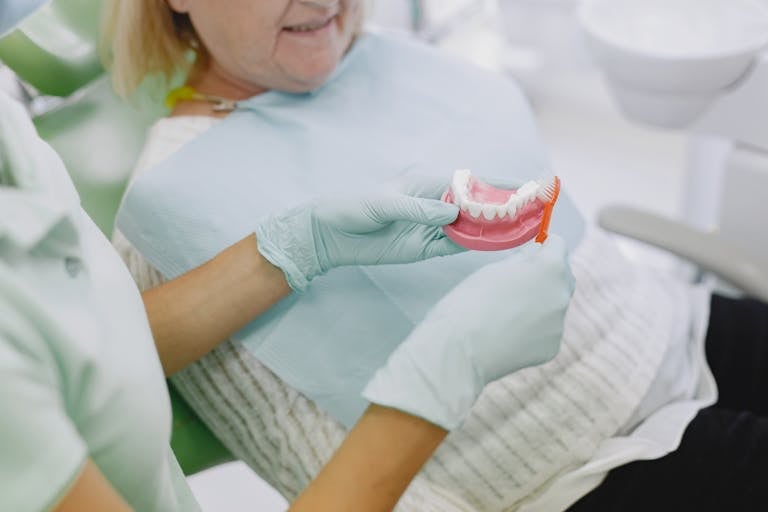

TOOTH REPLACEMENT
Replace missing teeth with a plan for comfort and confidence.
We compare partial, complete and implant-supported denture options while considering your remaining teeth, gums, bite, speech and daily routine.
- Compare the denture options available to you
- Plan fit, appearance and bite
- Get help adjusting to a new denture
- Learn how to clean and maintain it
WHAT TO EXPECT
What to expect when getting dentures.
01
Choosing the right type of denture
A partial denture replaces some missing teeth and uses the remaining teeth and tissues for support. A complete denture replaces all teeth in an arch. Implant-supported designs may provide additional retention in selected situations.
02
Planning the fit, bite and appearance
The dentist examines the gums, remaining teeth, bone shape, bite and available space. Records help establish the position, size and colour of the replacement teeth and how the upper and lower jaws meet.
Existing teeth may need treatment before a partial denture is made, and recently extracted areas may continue to change as they heal.
03
Getting used to a new denture
Speech, chewing and tissue comfort often require an adjustment period. Begin with manageable foods, follow the insertion and removal instructions, and attend adjustment visits rather than trying to alter the denture yourself.
04
Cleaning and follow-up visits
Dentures and the mouth should be cleaned every day. Remove the appliance as instructed, protect it from heat and damage, and continue regular examinations so the dentist can check the fit, tissues, bite and remaining teeth.
RELATED SERVICES
Related Dental Care
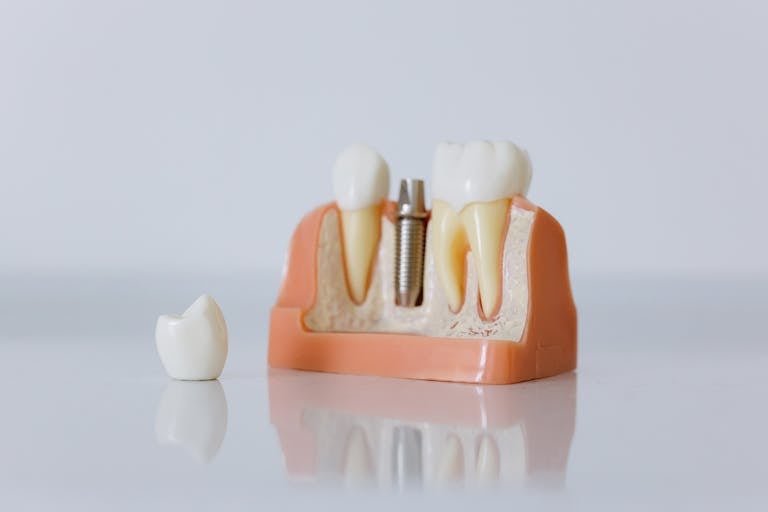

Senior Dental Care
Care for changing comfort, medication, gum, denture and tooth-replacement needs.
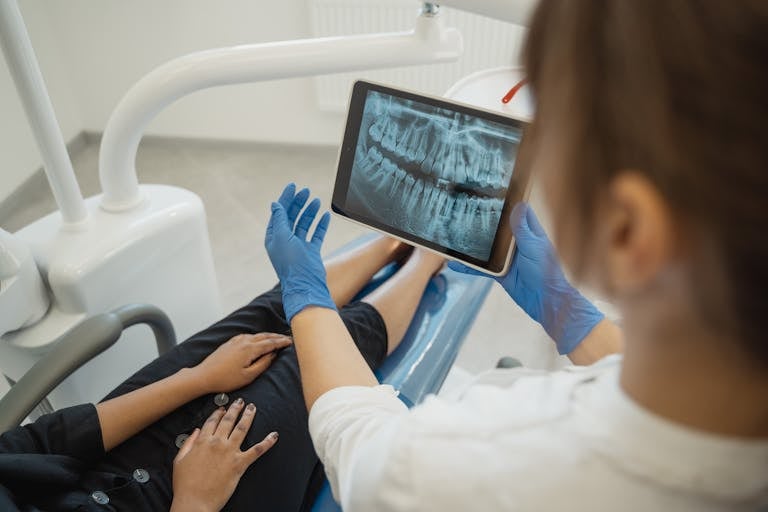
Tooth Extractions
Remove a tooth that cannot be predictably restored, with clear planning for healing and replacement when needed.
COMMON QUESTIONS
Denture questions
Find answers about partial and complete dentures, adjustment, cleaning and implant-supported options.
What is the difference between partial and complete dentures?
A partial denture replaces some teeth and uses remaining teeth for support. A complete denture replaces all teeth in an arch.
How long does it take to adjust to new dentures?
Speech, chewing and sore spots often improve with practice and adjustments. The timeline varies with the design, tissues and whether teeth were recently removed.
What foods are easiest at first?
Start with softer foods cut into smaller pieces and chew on both sides when possible. Gradually add firmer foods as comfort and control improve.
How should dentures be cleaned?
Clean them daily with a denture brush and appropriate cleanser, and clean the gums, tongue and any remaining teeth. Follow instructions about overnight removal and soaking.
Why might a denture need a reline or replacement?
The jaw and gums change over time. A reline can improve the fit in some cases, while worn teeth, cracks, poor bite or major tissue changes may require replacement.
Can implants help stabilize a denture?
Implants can improve retention in selected cases. Suitability depends on bone, health, anatomy, maintenance and the type of denture being planned.
Should I use denture adhesive?
A small amount may improve confidence for some well-fitting dentures, but adhesive should not compensate for a persistently loose or painful appliance.
What should I do if a denture creates a sore spot?
Remove the denture when needed for comfort and contact the office for an adjustment. Do not grind or reshape the denture yourself because that can make the fit less accurate.
Can a cracked denture be repaired at home?
Do not use household glue. Keep the pieces, avoid wearing an unsafe appliance and contact the office or a denture professional for proper repair.
READY FOR YOUR NEXT VISIT?
Keep routine dental care moving forward.
Request an appointment online or call the office at 905-529-2164.