
ORAL SURGERY
Wisdom teeth do not always need removal. We assess their position, symptoms, hygiene access, gum health and effect on nearby teeth before discussing treatment.
HomeWisdom Teeth Removal

ORAL SURGERY
Address problematic wisdom teeth before they damage nearby teeth or cause repeated discomfort.
Wisdom teeth do not always need removal. We assess their position, symptoms, hygiene access, gum health and effect on nearby teeth before discussing treatment.
- Review the position of the third molars
- Remove wisdom teeth only when there is a clinical reason
- Discuss procedure complexity and referral when needed
- Receive clear instructions for recovery and follow-up
WHAT TO EXPECT
What to know about wisdom teeth and removal.
01
When wisdom teeth can be monitored
Wisdom teeth do not automatically need to be removed. A third molar may be monitored when it is healthy, positioned acceptably, useful or harmless, and can be kept clean without damaging nearby teeth or tissues.
Regular examinations and appropriate imaging help track changes that may not be obvious at home.
02
Reasons removal may be recommended
Removal may be considered when a wisdom tooth causes repeated gum inflammation, decay, infection, food trapping, damage to a neighbouring tooth, a cystic change or another clinical concern. Position and access can make some teeth difficult to clean or restore.
03
How the procedure is planned
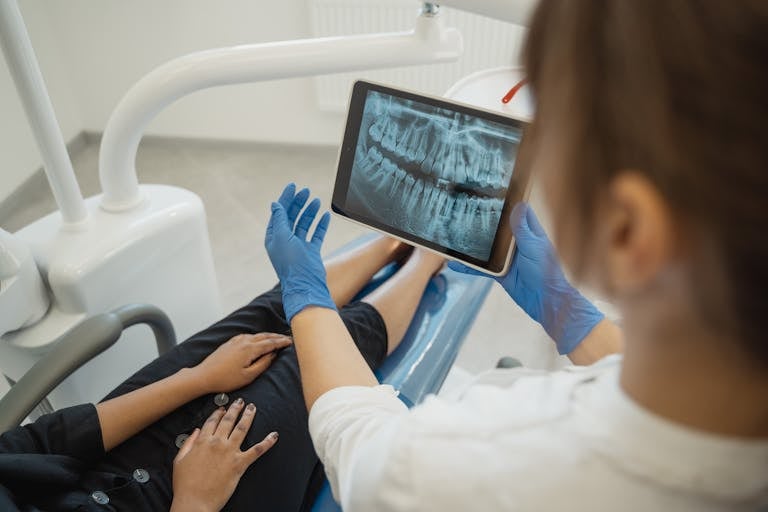
Radiographs help show the tooth angle, root shape, surrounding bone and relationship to nearby structures. The dentist reviews the expected complexity, anaesthesia and comfort options, and whether the procedure should be completed at Excel Dental or by a specialist.
04
Recovery and follow-up
Swelling, tenderness and limited opening can occur after removal. Follow instructions for cold packs, food, activity, cleaning and medication. Healing time varies with the number, position and complexity of the teeth removed.
Contact the office for persistent bleeding, worsening swelling, fever, difficulty breathing or swallowing, or pain that becomes more severe after initially improving.
RELATED SERVICES
Related Dental Care
Tooth Extractions
Remove a tooth that cannot be predictably restored, with clear planning for healing and replacement when needed.

Impacted Canines
Coordinate surgical exposure of an unerupted canine with an orthodontic treatment plan.
COMMON QUESTIONS
Wisdom teeth questions
Find answers about monitoring wisdom teeth, reasons for removal, recovery and signs that need follow-up.
Do all wisdom teeth need to be removed?
No. Wisdom teeth that are healthy, functional, cleanable and not damaging nearby tissues may be monitored.
Why might a wisdom tooth cause problems?
A wisdom tooth may be partly covered by gum, difficult to clean, decayed, infected, pressing against a neighbouring tooth or positioned in a way that creates another concern.
How long does recovery usually take?
Recovery varies with the number and position of the teeth and the type of procedure. Swelling and tenderness often improve over several days.
What symptoms should prompt an assessment?
Pain, swelling, a bad taste, difficulty opening, repeated gum infection or damage to the tooth in front should be evaluated.
Is there a best age for wisdom tooth removal?
There is no single age that applies to everyone. The decision is based on symptoms, development, position, risk to nearby teeth and the likely complexity of future removal.
When is referral to an oral and maxillofacial surgeon appropriate?
Referral may be recommended for complex impactions, medical or sedation considerations, anatomy or another factor that makes specialist care preferable.
Can a wisdom tooth damage the molar in front of it?
Yes. Decay, gum inflammation or root damage can develop where a wisdom tooth contacts the second molar. Examination and imaging help assess that area.
How does the dentist decide whether removal can wait?
The decision considers symptoms, cleanliness, tooth position, effects on the neighbouring molar, imaging findings and the likelihood that future removal will become more difficult.
What are possible signs of dry socket?
Increasing pain a few days after extraction, pain radiating toward the ear and an unpleasant taste or odour can occur. Contact the office for assessment rather than self-treating the socket.
READY FOR YOUR NEXT VISIT?
Keep routine dental care moving forward.
Request an appointment online or call the office at 905-529-2164.