
ROOT-END SURGERY
An apicoectomy removes inflamed or infected tissue near the root tip and seals the end of the canal. It may be considered when a previously treated tooth continues to have a localized problem.
HomeApicoectomy

ROOT-END SURGERY
Treat persistent infection at the tip of a tooth root when saving the tooth is still possible.
An apicoectomy removes inflamed or infected tissue near the root tip and seals the end of the canal. It may be considered when a previously treated tooth continues to have a localized problem.
- Confirm where the persistent problem is located
- Compare retreatment, surgery and other alternatives
- Remove infected tissue and seal the root end
- Monitor healing with follow-up examinations
WHAT TO EXPECT
What to expect when root-end surgery is considered.
01
Why a problem may remain after root canal treatment
A tooth can sometimes remain tender or show a persistent area of infection after root canal treatment. Contributing factors may include complex root anatomy, a small untreated canal, leakage, a fracture or inflammation around the root tip.
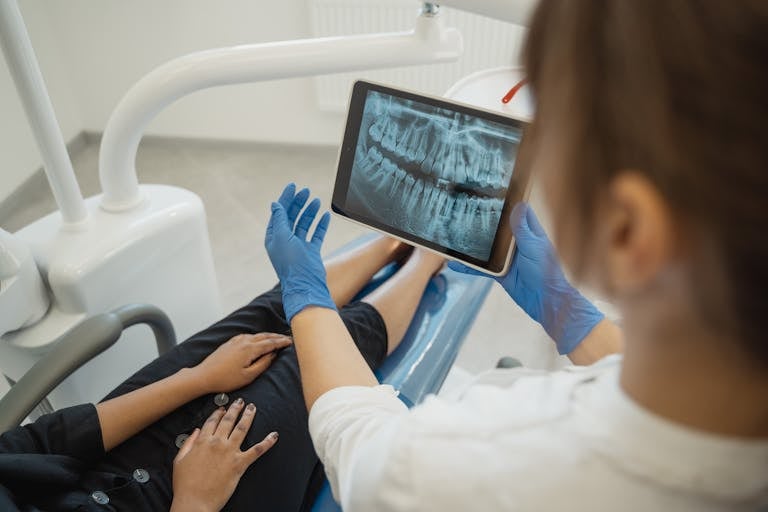
An examination and diagnostic imaging are needed to identify the likely source before another procedure is recommended.
02
When an apicoectomy may be considered
Root-end surgery may be considered when the tooth is otherwise restorable and a localized problem near the root tip is unlikely to be resolved predictably through conventional retreatment. Alternatives, including retreatment, monitoring, extraction or referral, should be discussed first.
03
What the procedure involves
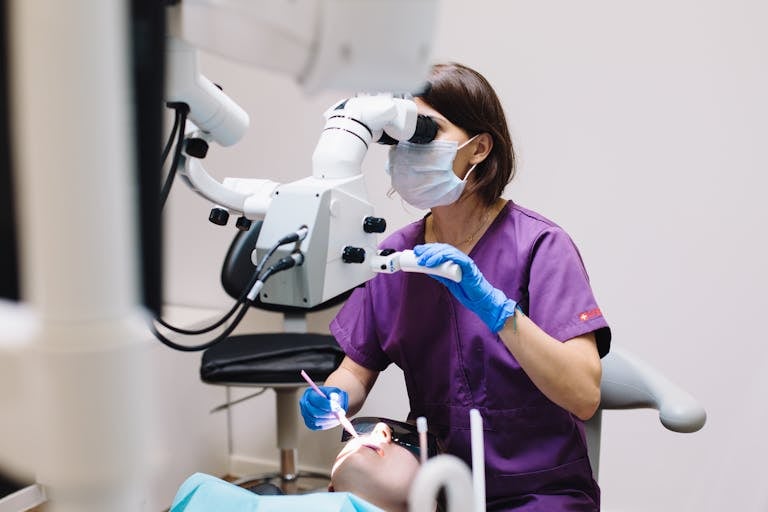
The area is numbed and a small opening is made through the gum to reach the root tip. Inflamed tissue and a small portion of the root end are removed. The canal end is prepared and sealed, and the gum is repositioned with sutures.
Magnification and specialized instruments may be used. The dentist will explain whether the case can be managed at Excel Dental or should be referred to an endodontic specialist.
04
Recovery and long-term review
Mild swelling, bruising or tenderness can occur. Follow instructions for cleaning, food, activity and medication, and return for suture removal or review when scheduled. Follow-up imaging may be recommended to assess bone healing around the root tip.
RELATED SERVICES
Related Dental Care
COMMON QUESTIONS
Apicoectomy questions
Find answers about persistent root-tip infection, alternatives to surgery and what to expect during recovery.
How is an apicoectomy different from root canal treatment?
Root canal treatment cleans and seals the canals from inside the tooth. An apicoectomy approaches the root tip through the gum and bone to remove persistent tissue and seal the end of the root.
When might root-end surgery be considered?
It may be considered when a localized problem remains after root canal treatment and retreatment is not expected to resolve it or is not the preferred option.
Will the procedure be completed at Excel Dental?
Suitability depends on the tooth, anatomy and complexity. The dentist will explain whether treatment can be completed at Excel Dental or whether specialist referral is recommended.
What is recovery like after an apicoectomy?
Temporary swelling, tenderness and bruising can occur. You will receive instructions for cleaning, eating, activity, medication and follow-up.
Does the crown or filling need to be replaced afterward?
Not always. The existing restoration is assessed as part of the plan. It may remain, be repaired or be replaced depending on its condition and the tooth’s needs.
What alternatives should be discussed?
Depending on the situation, alternatives may include observation, root canal retreatment, specialist care or removal of the tooth. The dentist will explain the trade-offs.
Can an apicoectomy help avoid removing the tooth?
The goal is to retain the natural tooth when the root-end problem can be treated predictably. The dentist will also discuss retreatment, monitoring or extraction when those options are more appropriate.
What happens during root-end surgery?
The clinician accesses the root tip through the gum, removes the inflamed tissue and a small portion of the root end, then seals the area when indicated.
How is healing checked afterward?
Follow-up may include an examination and later X-rays to assess symptoms, soft-tissue healing and bone repair. Results vary with the tooth and underlying problem.
READY FOR YOUR NEXT VISIT?
Keep routine dental care moving forward.
Request an appointment online or call the office at 905-529-2164.