
ORAL SURGERY & ORTHODONTIC SUPPORT
When a permanent canine does not erupt normally, an orthodontist may recommend surgical exposure so the tooth can be guided into the dental arch. We coordinate the procedure and follow-up around the orthodontic plan.
HomeImpacted Canines

ORAL SURGERY & ORTHODONTIC SUPPORT
Help an unerupted canine move into position with coordinated surgical and orthodontic care.
When a permanent canine does not erupt normally, an orthodontist may recommend surgical exposure so the tooth can be guided into the dental arch. We coordinate the procedure and follow-up around the orthodontic plan.
- Confirm the position of the unerupted tooth
- Coordinate timing with the orthodontist
- Discuss exposure and attachment options
- Plan healing, hygiene and orthodontic follow-up
WHAT TO EXPECT
How impacted canines are assessed and guided into place.
01
Why canine teeth matter
Permanent canine teeth help guide the bite and contribute to the shape of the smile. When a canine remains trapped beneath the gum or bone, its position may affect nearby roots, spacing and the orthodontic plan.
02
Evaluating the tooth position
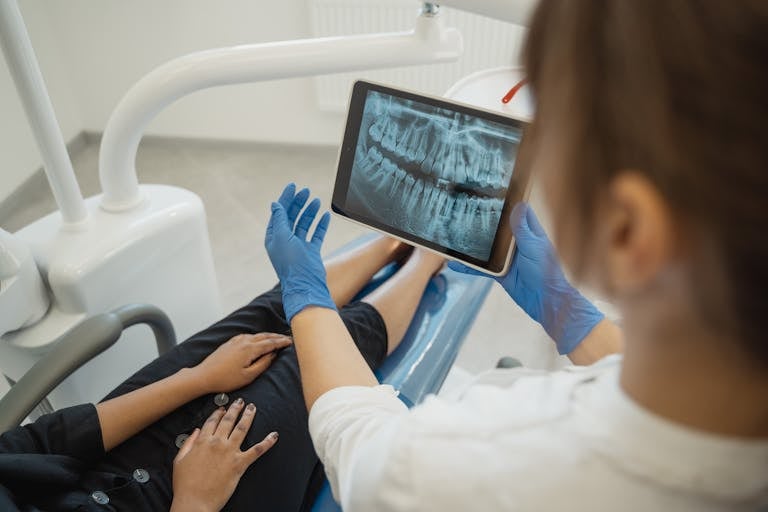
Examination and imaging help show where the canine is located, whether there is enough space for it, how close it is to neighbouring roots and whether another tooth or obstruction is affecting eruption.
The dentist and orthodontist use this information to decide whether monitoring, space creation, extraction or surgical exposure is appropriate.
03
Surgical exposure and orthodontic guidance
During exposure, a small opening is created in the gum and sometimes the surrounding bone so the tooth can be reached. An orthodontic attachment may be placed, allowing the orthodontist to guide the tooth gradually into the dental arch.
The exact technique depends on whether the tooth is approached from the palate or the front of the jaw and on the orthodontic plan.
04
Healing and coordinated follow-up
After surgery, keep the area clean as instructed and attend the planned dental and orthodontic visits. Moving an impacted canine takes time, and progress depends on tooth position, available space, tissue response and consistent orthodontic care.
RELATED SERVICES
Related Dental Care
Wisdom Teeth Removal
Assess and remove problematic third molars when there is a clear clinical reason.
COMMON QUESTIONS
Impacted canine questions
Find answers about locating an unerupted canine, coordinating with orthodontics and what surgical exposure may involve.
What is an impacted canine?
An impacted canine is a permanent canine tooth that has not erupted into its expected position. It may remain beneath the gum or bone and can sometimes affect nearby teeth.
Why would the tooth be surgically exposed?
When the orthodontic plan is to keep the canine, a small procedure may uncover the tooth and allow an attachment to be placed so the orthodontist can guide it gradually into position.
Will every impacted canine be treated this way?
No. The plan depends on tooth position, available space, age, neighbouring roots and the overall orthodontic goals.
How is the timing coordinated with orthodontic treatment?
The orthodontist and dentist plan when space should be created, when exposure should occur and when traction can begin after healing.
What is recovery like after exposure?
Tenderness and swelling are usually managed with written home-care instructions. The attachment and surrounding area must be kept clean while orthodontic movement begins.
Can an impacted canine damage another tooth?
In some positions, an unerupted canine can affect the root of a neighbouring tooth or create another local problem. Imaging helps assess that risk.
Why is an impacted canine important?
Canines help guide the bite and support the smile. An impacted tooth can affect nearby roots, alignment and treatment planning even when it does not hurt.
What if an impacted canine cannot be guided into place?
The orthodontist and dentist may discuss monitoring, removal, space closure or a future replacement option. The decision depends on the tooth’s position, neighbouring roots, age and the overall orthodontic plan.
How long does an impacted canine take to move?
Movement is gradual and varies with age, position, bone, root shape and orthodontic response. The orthodontist monitors progress and adjusts the plan.
READY FOR YOUR NEXT VISIT?
Keep routine dental care moving forward.
Request an appointment online or call the office at 905-529-2164.