
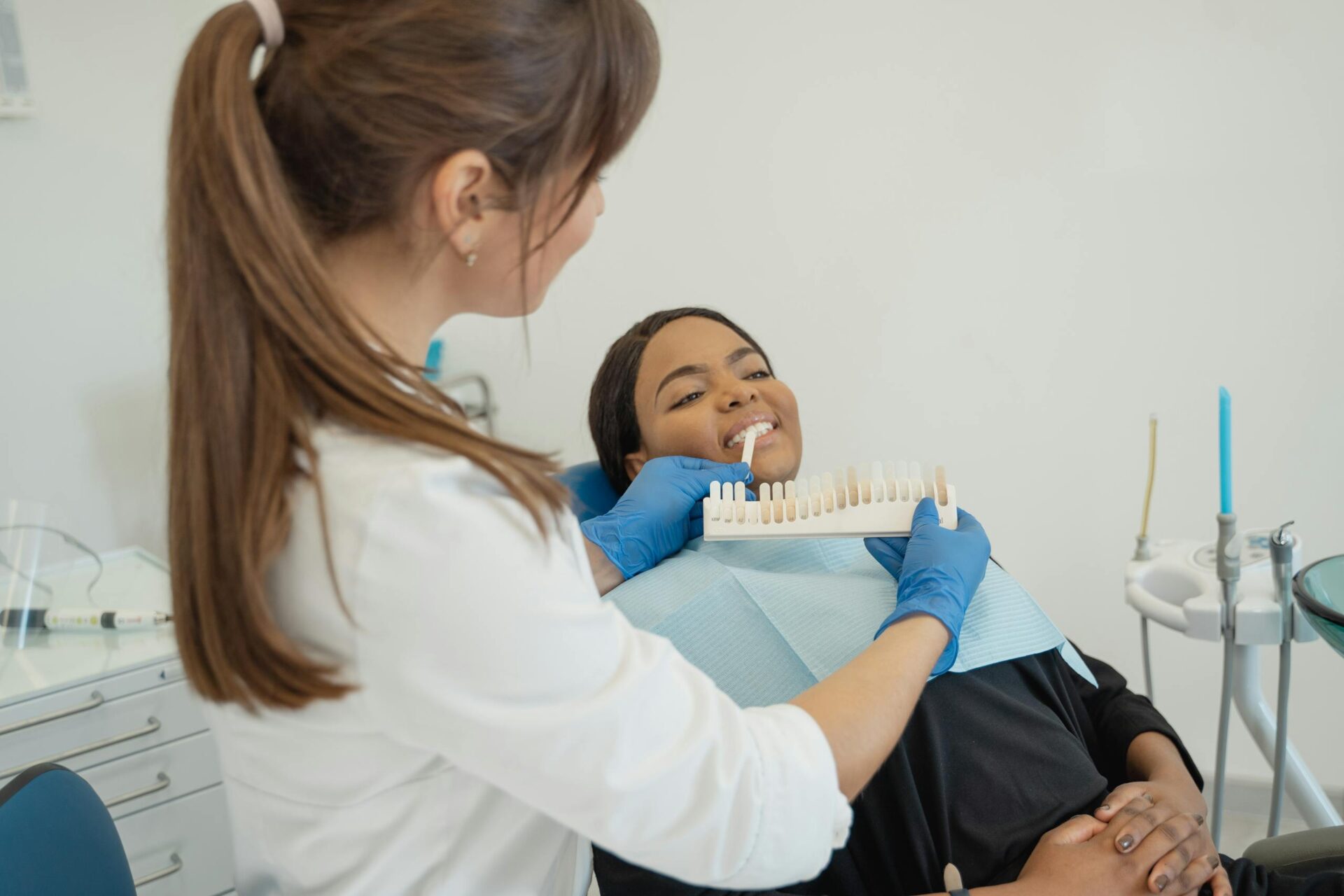
Whitening before bonding or veneers: what comes first?
Short answer: whitening usually comes before bonding or veneers when the goal is a matched cosmetic result. Whitening changes the colour of natural teeth, while bonding and veneers are planned around the final shade you want to reach.
If you are comparing smile options, our cosmetic dentistry page gives a broader overview of the treatment choices that may come up at a visit.
Why whitening usually comes first
When shade matching matters, it usually makes sense to whiten first and choose bonding or veneer shades after the teeth have settled into their lighter colour. The Canadian Dental Association notes that bonding and veneers are matched to natural teeth, so the final tooth shade matters when the restoration is made.
That order helps your dentist plan for the smile you will actually have after whitening, not the darker shade you started with.
Why restorations do not whiten
Bleaching changes natural tooth structure. It does not whiten fillings, crowns, veneers, or dentures the way it whitens enamel. The Canadian Dental Association’s tooth bleaching guidance makes that distinction clear.
So if a visible restoration is already part of your smile, whitening may improve the natural teeth around it, but the restoration itself will not change colour. In some cases, the plan is to whiten first and then replace the visible restoration so the new work can match the lighter shade.
How bonding and veneers are planned
Bonding and veneers are not chosen in isolation. They are usually designed to fit the final look of the teeth around them, including brightness and how even the colour appears across the smile.
That is why a shade-planning conversation before treatment is so helpful. It gives your dentist a chance to decide whether whitening should happen first, whether an older restoration should be updated, or whether a different sequence would make more sense.
When the order may change
Whitening is not the first step for every patient. The order may change if the exam finds:
- an existing filling, crown, veneer, or denture that needs replacement
- uneven discoloration that may not respond evenly to bleaching
- cracked teeth, decay, or worn enamel
- gum concerns or other tooth-health issues that should be addressed first
- a cosmetic goal that is better handled with another treatment sequence
Some research also suggests that bleaching can temporarily affect adhesive bond strength. That does not mean bonding cannot follow whitening; it means timing can matter, and a dentist may plan the steps carefully instead of treating them as interchangeable.
Why the exam matters first
A cosmetic plan works best when appearance and oral health are planned together. An exam helps check whether whitening is appropriate, whether any restorations should be updated, and how to reduce the chance of a colour mismatch that could lead to extra work later.
Regular checkups are also part of good oral care. A planning visit is the right place to sort out health concerns before focusing on shade and appearance.
Questions to ask your dentist
- Should I whiten before bonding or veneers, or does my situation need a different order?
- Do I already have fillings or crowns in the area that may need replacement?
- How long should I wait after whitening before any adhesive treatment?
- What shade are we aiming for, and what will look natural with my teeth?
Next step for Hamilton patients
If you are in Hamilton and thinking about a brighter smile, the most useful first step is a planning visit. An exam and shade discussion can help you and your dentist decide whether whitening should come first or whether your treatment should follow another sequence based on your teeth and restorations.
Key sources
- Bonding and veneers guidance
- Government of Canada: Oral Health
- Systematic review on bleaching and bond strength
This article is for general education only and does not replace personalized advice, diagnosis, or treatment from a licensed dentist.