
Implant Crown vs Bridge vs Partial Denture: How Patients Can Compare the Options
When one or a few teeth are missing, people often compare three common options: an implant crown, a bridge, and a removable partial denture. All three can help with chewing and appearance, but they differ in how they attach, how they clean, and whether they leave nearby teeth alone.
What an implant crown is
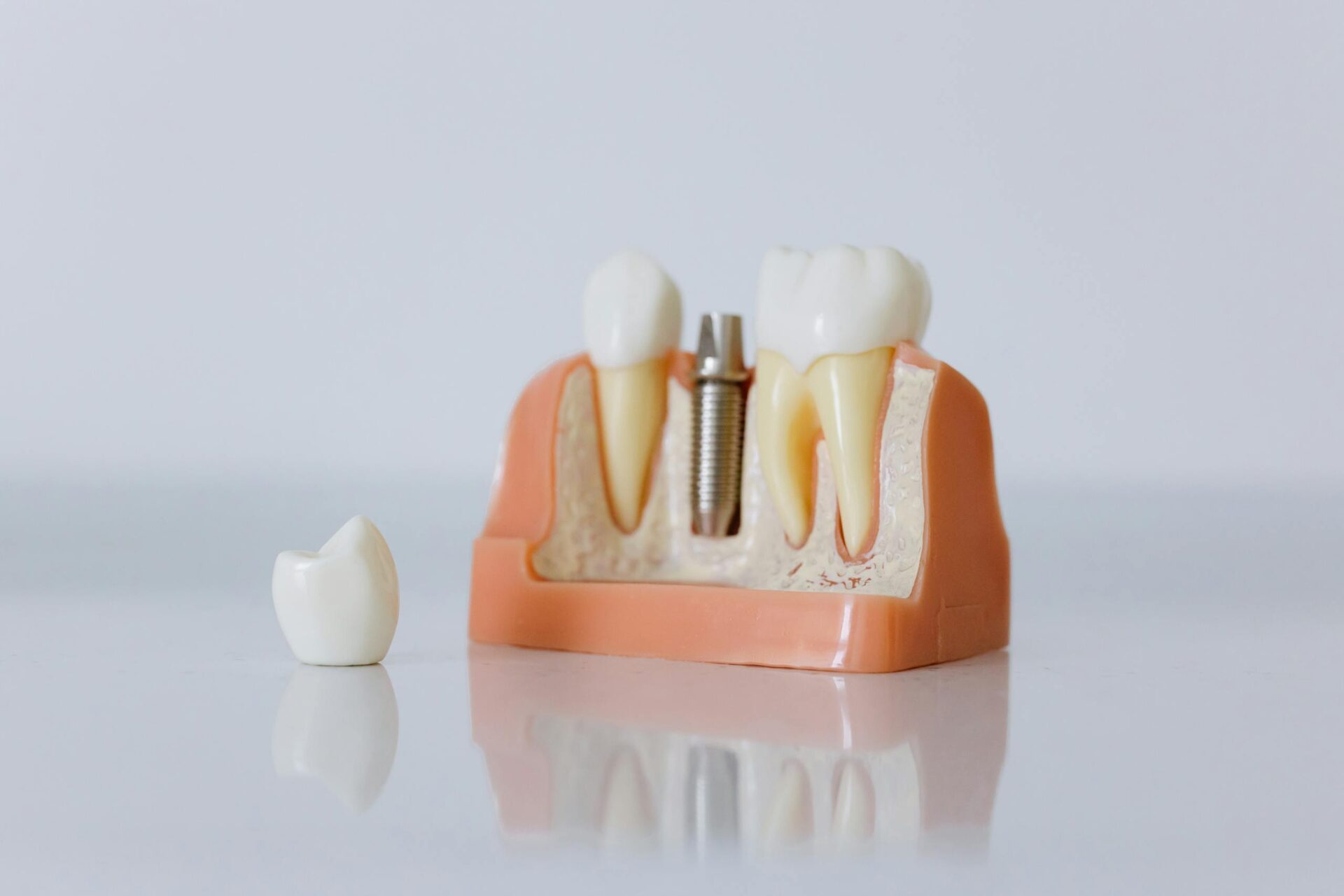
An implant crown is a single-tooth replacement supported by a dental implant placed in the jaw. After healing, a crown is attached to the implant so the replacement tooth stands on its own. One possible advantage is that the teeth beside the space usually stay untouched, which can matter when those teeth are healthy. If you want a broader look at the process, the dental implants page explains the larger treatment pathway.
An implant crown is not right for every mouth. It usually involves surgery, healing time, enough bone and healthy gum tissue, and an exam-based decision about whether the site is suitable.
How a bridge works
A bridge replaces a missing tooth by using the teeth on either side for support. In many cases, those neighbouring teeth need some reshaping so crowns can hold the bridge in place. That can be a practical choice when a fixed replacement is preferred, but it does mean changing the supporting teeth.
Because a bridge is fixed, many people like how it feels. The tradeoff is cleaning: you have to brush and clean under the middle section and around the supporting teeth so plaque does not collect there.
What patients usually notice with a partial denture
A removable partial denture replaces one or more missing teeth with a device that can be taken out for cleaning. It is often less invasive at the start because it usually does not involve surgery and may not require as much tooth preparation as a bridge.
Partial dentures can be a reasonable choice when several teeth are missing, when nearby teeth are not good bridge supports, or when you want a more removable option. Some people adjust well, while others notice movement, bulk, or changes in speech at first. Satisfaction varies, and fit can change over time as teeth and gums change.
Fixed or removable: the main comparison
- Implant crown: fixed in place, usually leaves neighbouring teeth untouched, but involves surgery and healing.
- Bridge: fixed in place, but usually relies on the teeth beside the gap for support.
- Partial denture: removable, often less invasive at the start, but may feel less stable than a fixed option.
Daily care matters for all three. An implant crown still needs good home care and regular professional checks. A bridge needs cleaning under and around the connected teeth. A partial denture needs daily cleaning outside the mouth, plus brushing of the remaining teeth and gums.
How dentists decide
The best choice depends on the number and location of the missing teeth, the condition of the teeth beside the gap, gum health, bone support, bite forces, home care, budget, and how soon you want the replacement completed. Your dentist may also ask whether nearby teeth already need crowns or other treatment, since that can change the best option.
No single option is right for everyone. The goal is to match the treatment to the mouth in front of us, not to force one solution into every case.
How Canadian coverage can affect the choice
Coverage can make a real difference. Under the Canadian Dental Care Plan, eligibility, frequency limits, documentation, provider participation, and preauthorization rules can affect what is covered. Implant-related services are generally more limited than crowns, bridges, or partial dentures, but final coverage still depends on the service and the clinical criteria in place at the time.
If coverage matters, ask your dentist and plan administrator what the current rules allow before you decide.
Next step in Hamilton
If you are comparing an implant crown, bridge, or partial denture in Hamilton, an exam can help you sort out the practical details: which teeth are involved, whether the bone and gums are suitable, how each option would be cleaned, and how coverage may affect the decision. A careful discussion can make the choice feel much clearer.
Key sources
- Government of Canada: CDCP Dental Benefits Guide
- Canadian Dental Association: Dentures
- PubMed — Systematic Review of Patient Satisfaction With Removable Partial Dentures
This article is for general education only and does not replace personalized advice, diagnosis, or treatment from a licensed dentist.