
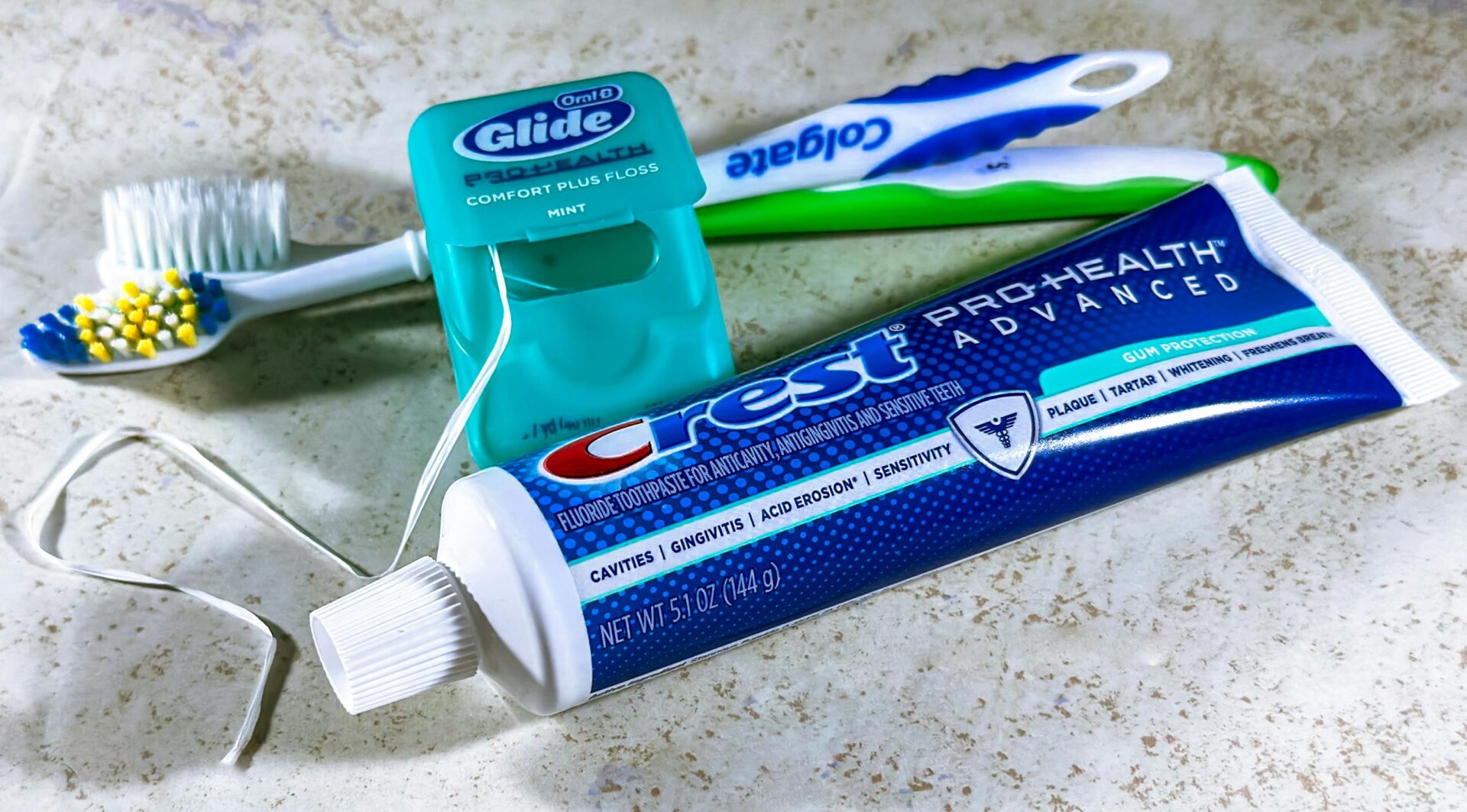
String Floss Is Not Working: A Simple Guide to Manual Between-Teeth Cleaners
String floss is useful, especially for very tight spaces between teeth. But if it is hard to hold, difficult to use around back teeth, catches repeatedly, or simply is not becoming part of your routine, it may be time to rethink the tool—not give up on cleaning between your teeth.
The shared goal is simple: remove plaque between teeth every day in addition to brushing. Several manual tools can help, including traditional floss, floss holders, picks or sticks, and interdental brushes. The most practical choice is one that fits the space, can be used gently, and is realistic for you to use consistently.
Why string floss sometimes does not work in real life
Traditional string floss may work well when teeth touch closely and there is little or no room for a small brush. However, it can be awkward for people who have trouble with hand dexterity or reaching the back of the mouth.
Sometimes the barrier is technique. Floss should be eased through the contact rather than snapped down onto the gums, then curved gently around each tooth surface. If floss repeatedly catches, tears, or frays in the same spot, do not keep pulling harder. Ask a dentist or hygienist to assess that area and show you a comfortable way to clean it.
A simple manual cleaner decision tree
- Are your teeth very close together?
String floss may be the most practical option when there is no room for a brush to pass between the teeth. - Can floss fit, but your fingers cannot manage it well?
A floss holder, pick, or floss stick may make the task easier to control, including around back teeth. - Do you have visibly more open spaces between some teeth?
Ask a hygienist or dentist whether an interdental brush is appropriate and what size fits that space. - Does a tool catch, fray, hurt, or require force?
Do not force it or keep experimenting aggressively at home. Arrange a professional assessment instead.
A peer-reviewed clinical decision framework for interdental cleaning emphasizes matching the tool to the size and shape of the space between teeth, as well as a person’s dexterity, motivation, and daily barriers. It is normal to need different approaches in different areas of the mouth.
When floss holders, picks, or sticks may help
A holder or pick keeps a short piece of floss stretched on a handle. For some people, this reduces the finger gymnastics of wrapping floss around both hands. It may be helpful when reaching molars is the main problem.
These tools are not automatically more effective than well-used string floss. Their main advantage may be convenience and control. If a holder helps you clean each contact gently and regularly, it may be a practical fit for your routine.
When using a holder or pick, move slowly through each contact and avoid forcing the floss down onto the gums. A dental professional can demonstrate an angle that helps you clean the sides of the teeth rather than only moving through the middle of the space.
When an interdental brush may be a better fit
Interdental brushes are small brushes designed to clean between teeth where there is enough space for them to pass comfortably. They may be useful in more open spaces between teeth or around certain dental work, but they are not meant to be forced through a tight contact.
Size matters. A brush that does not fit comfortably should not be pushed through the space. Rather than trying progressively larger brushes on your own, ask your hygienist or dentist to show you an appropriate size and technique for each area.
Research comparing home-use interdental cleaners is helpful but not definitive. A Cochrane review of 35 randomized trials found that many comparisons had low to very low certainty evidence. Some short-term comparisons suggest that interdental brushes may help reduce gingivitis more than floss in suitable spaces, but this does not mean they replace floss for everyone.
When not to keep experimenting at home
Switching tools may solve a handling problem, but it should not be used to manage ongoing mouth or gum symptoms without an assessment. The Government of Canada advises seeking oral-health care for concerns such as bleeding or swollen gums, persistent bad breath, gum recession, loose teeth, or mouth and tooth problems that continue.
Bleeding is not a reason to scrub harder or ignore the area. If bleeding continues, ask a dental professional to consider it in the context of your gum health, home-care routine, dental work, and overall health. The same applies if an interdental brush suddenly no longer fits, floss begins catching in a new place, or cleaning between teeth becomes painful.
What to ask at your next dental visit
- Which spaces in my mouth are tight, and which are open enough for a brush?
- Would a floss holder or pick make it easier for me to reach my back teeth?
- What size of interdental brush fits without forcing it?
- Can you show me the technique on the areas I find difficult?
- Why does floss catch or fray in this specific spot?
- Do my gum symptoms need further evaluation?
A practical next step
If flossing has become frustrating, ask your dental team to review the areas that are difficult to clean and demonstrate a tool that fits your needs. If you are ready to discuss your options at Excel Dental in Hamilton, our general dentistry page is a useful starting point.
Bottom line: String floss may remain useful for tight spaces, while a holder or pick may help when handling is the main barrier. More open spaces may benefit from a properly sized interdental brush. If a tool catches, hurts, frays, or your gums continue to bleed or feel swollen, ask a dental professional before simply trying a stronger or larger product.
Key sources
- ADA: Flossing and Interdental Cleaning
- Evidence-Based Interdental Cleaning Decision Tree
- Gum Disease
This article is for general education only and does not replace personalized advice, diagnosis, or treatment from a licensed dentist.