
Dental Implant Consultation in Hamilton: What Happens First?
Many patients arrive at a first implant visit expecting treatment to start right away. In most cases, the first appointment is for assessment and planning. That visit helps the dentist see whether dental implants are a good fit for your mouth, your health, and your goals for replacing a missing tooth.
1. Health and dental history review
The visit usually starts with questions about your medical history, medications, allergies, past dental treatment, and any symptoms in the area. The dentist also asks what matters most to you: chewing, appearance, comfort, or replacing a bridge or denture.
This step matters because implant planning is individual. Health conditions, gum disease, past tooth loss, and the condition of nearby teeth can all affect timing and sequence.
2. Oral exam and initial imaging
Next comes an exam of the teeth, gums, bite, and the space where the implant may go. The dentist looks for gum health, available room, wear or shifting of nearby teeth, and signs that the area needs other treatment first.
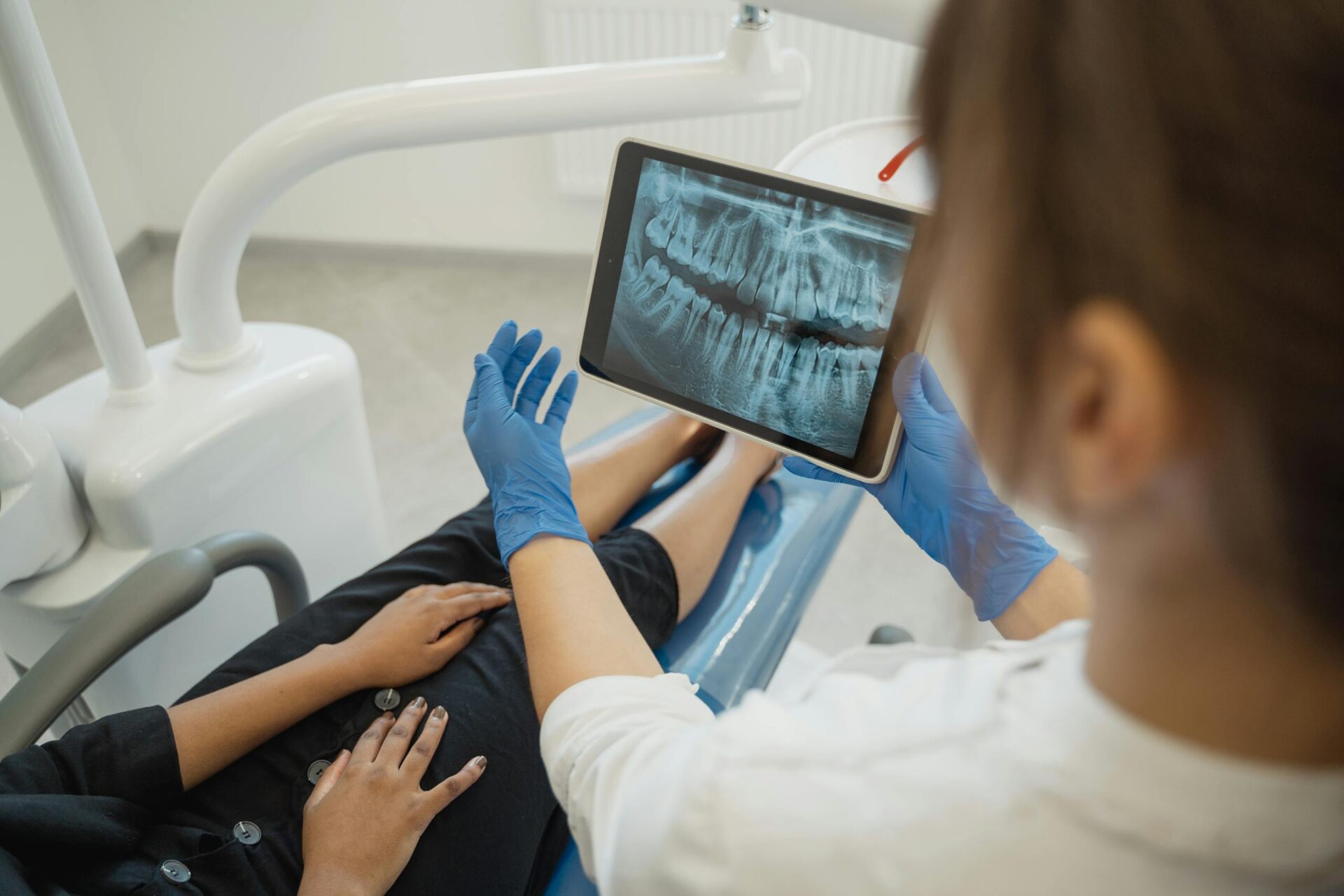
X-rays are commonly part of the first visit. They help show the tooth roots, bone levels, and nearby structures. The Canadian Dental Association describes this as part of the normal implant assessment.
3. When x-rays are enough, and when CBCT may help
Not every patient needs a 3D scan. A cone beam CT, or CBCT, may be recommended when a regular x-ray does not give enough detail for planning, or when the dentist needs a more complete view of bone shape, thickness, or nearby anatomy.
The American Academy of Oral and Maxillofacial Radiology says cross-sectional imaging can be useful for implant planning when it is clinically indicated. In plain language: the scan is chosen when it adds useful information, not automatically for every case.
4. Candidacy, alternatives, and whether grafting is needed
The first consultation is also where candidacy is discussed. The dentist may review whether there is enough bone support, whether the gums are healthy enough, and whether the tooth replacement should be done now or in stages.
Bone grafting may come up, but it is not assumed for everyone. If the bone needs to be built up first, that can change the timing before implant placement. Depending on your case, the conversation may also include a bridge, a denture, or waiting for the area to heal before deciding.
That planning step is important because a good implant plan matches the treatment to the person, not the other way around.
5. What you usually leave with
At the end of the consultation, patients often leave with a proposed treatment plan, an estimated sequence, and a sense of whether more records are needed before the next step. Sometimes that means more imaging or a follow-up visit; sometimes it means the dentist can move ahead with planning right away.
If anxiety is part of the conversation, your dentist may discuss comfort options such as nitrous oxide or light oral sedation when appropriate. The exam and planning still come first.
If you want a broader overview of treatment, see our dental implants page. If you are ready to book or ask a few questions first, contact Excel Dental and ask about an implant consultation.
Key sources
- Canadian Dental Association: Dental Implants
- Patient Assessment in Implant Treatment
- American Association of Oral and Maxillofacial Surgeons — Dental Implant Surgery
This article is for general education only and does not replace personalized advice, diagnosis, or treatment from a licensed dentist.